Generative AI has entered creatives’ work: we use it to explore ideas, retouch, extend an image, draft text. But once the result is delivered to a client who will use it commercially, questions arise: who owns this work? Can it be protected? What are the risks? Important: this guide gives general markers, it does not replace a lawyer’s advice, and the law moves fast. I did not find a reliable source on Senegal’s precise position: for any sensitive project, consult a legal professional.
1. What is generally known
In several countries, copyright protection requires human creative input. According to the sources consulted, an image produced entirely by AI, without real human intervention, is often hard to protect. Conversely, a work where a human makes real creative choices (composition, retouching, assembly, drawing) is more likely to be. Rules vary by country and are still being clarified.
2. Three levels of AI use
Assistance
AI helps with finding ideas, variants, cleaning a file. Most of the creation stays human. Low risk.
Co-creation
You start from a generated result, but you redraw, recompose and decide substantially. Keep a record of your interventions.
Pure generation
You deliver as is what the tool produces. This is where protection is most uncertain, and where a logo risks resembling something that already exists.
3. The special case of the logo
A logo must be unique and registrable as a trademark. An AI-generated logo can resemble existing works without your knowing, and its protection is uncertain. For a logo, favour a human drawing, possibly inspired by AI, then check originality with a reverse image search before delivering.
4. The tools’ terms matter
Each tool has its terms of use: commercial use allowed or not depending on the plan, ownership of results, possible guarantees. One of the sources consulted says Adobe Firefly is, according to it, the only tool offering legal protection in case of dispute under certain conditions: check the publisher’s current terms rather than relying on a summary. In every case, read the tool’s licence before delivering a result to a client.
5. The evidence to keep
If you are ever asked to prove your input, these items protect you.
- The prompts used and the successive versions.
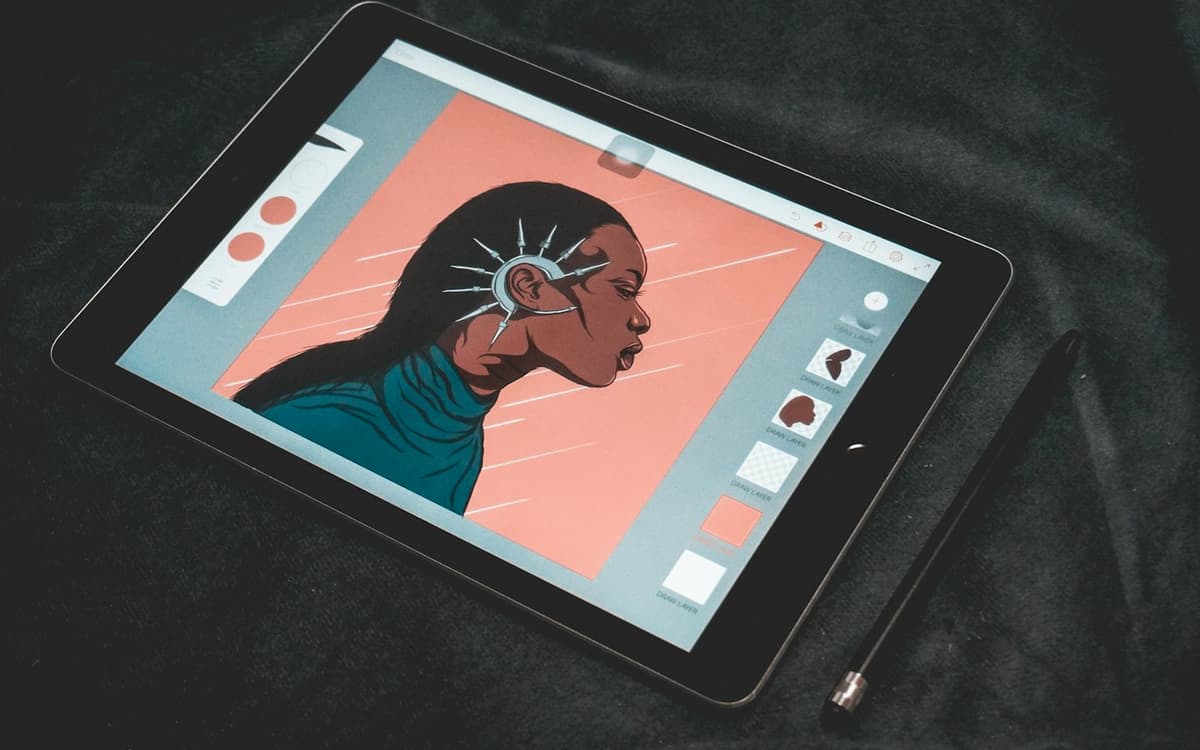
- Your sketches, working files and layers showing your retouching.
- The date and the tool used at each step.
- The sources of non-generated elements (photos, fonts) with their licence.
6. What to write in the quote
Transparency avoids unpleasant surprises. Include a clause stating whether AI was used, for which part, and with what limit of guarantee.
7. Good reflexes before delivering
- Re-read the tool’s licence for commercial use.
- Check that no element closely resembles a known brand or character.
- Retouch and sign your input: a raw result is a weak point.
- Avoid giving the tool confidential client data.
- For a logo or a brand, do not deliver a purely generated result.
8. What to tell the client
Many clients wonder without daring to ask. Get ahead of it: explain where AI saves you time, where your human input is essential, and why it does not change the quality. Trust is stronger when it is explained. For how we work, or for a brand project, contact us.