
Countless founders and project leads spend months chasing funding empty-handed not because their venture lacks merit, but because they knock on the wrong door at the wrong stage — pitching a traditional commercial bank on an untested idea on paper, or submitting a grant application with vague round numbers and missing legal paperwork.
Securing capital follows clear rules: no public agency, bank, foundation or investor funds “a dream” — they fund a precisely costed plan backed by a legally compliant organisation that can prove how every unit of currency will be deployed and what measurable results or repayments it will generate. Here is the complete map of funding channels and the exact step-by-step process to follow.
1. Match the funding source to your real stage of maturity
Different capital providers operate on fundamentally different risk models. Pick the channel built for your current stage:
1. Idea and early validation: bootstrapping, pre-sales and pitch grants
- Customer revenue and pre-orders: landing your first ten paying clients or twenty pre-orders gives you stronger leverage with future funders than fifty slide decks.
- Startup competitions, fellowships and seed grants: non-dilutive, non-repayable awards ideal for funding an initial prototype, test batch or core equipment.
- Reward-based crowdfunding: pre-selling a book, film, garment run or consumer product to your community — especially effective across the cultural and creative industries.
2. Formalisation and first growth step: public SME agencies, honour loans and guarantees
Most countries run dedicated public instruments supporting youth, women-led businesses, artisans and SMEs (for instance in Senegal: DER/FJ for youth and women entrepreneurs, ADEPME for SME upgrading, FONGIP for bank loan guarantees, and FONSIS for strategic co-investment; or national equivalents such as Bpifrance, Startup Tunisia or national enterprise funds elsewhere). These programmes pair technical coaching with subsidised rates or partial credit guarantees.
3. Scaling proven revenue: microfinance, equipment leasing and bank credit
- Microfinance and mesofinance institutions: faster and more flexible than tier-one banks for working capital or small machinery once you can show several months of steady sales.
- Commercial bank loans and equipment leasing: suited to businesses with clean financial statements and recurring cash flow. Leasing is particularly effective for vehicles or production machinery, as the asset itself secures the contract.
4. High-impact or high-growth ventures: international donors and equity investors
- NGO, foundation, embassy and multilateral calls for proposals: targeted grants backing job creation, sustainable agriculture, clean energy, civic tech, women in tech or the UN Sustainable Development Goals.
- Angel investors and venture capital (VC): equity investment (trading a share of company ownership rather than taking on monthly debt) reserved for scalable businesses capable of rapid regional or international expansion.
2. Four legal and financial prerequisites before applying anywhere
Over half of funding applications get disqualified during initial administrative screening before reviewers ever read the project summary. Put these four foundations in order first:
- Clean legal registration: up-to-date incorporation documents (in Senegal / OHADA jurisdictions: RCCM trade registry extract, NINEA tax ID and registered bylaws for companies, or official registration receipt for NGOs/associations).
- A dedicated business bank account: separate business cash flows strictly from personal spending, and route mobile-money sales regularly into the company account so six months of clean bank statements back up your revenue claims.
- Up-to-date bookkeeping: maintain numbered client invoices, supplier receipts and a monthly income/expense ledger from day one.
- Tax and social compliance: check early how to obtain tax-clearance certificates required by public grants and institutional tenders so deadlines never catch you off guard.
3. The 7 core documents inside a winning funding application
Assemble a master funding data room containing seven crisp components:
- 1. Executive Summary (1 to 2 pages max): who you are, the concrete problem solved, target customers, traction achieved so far, the exact amount requested and its line-by-line allocation.
- 2. Grounded Business Plan (10 to 15 pages): field-verified market reality (actual local pricing, real competitors, distribution channels — see launching your brand in Senegal), unit economics, go-to-market plan, team roles and a 12-to-24-month execution timeline.
- 3. Three-year financial projections: four linked tables are mandatory — initial financing plan (uses vs sources of funds), 3-year projected income statement, 12-month monthly cash-flow forecast (proving you will not run out of cash mid-year) and break-even analysis.
- 4. Supplier pro-forma invoices: attach real, dated quotes (ideally two or three comparative quotes for major items such as machinery, fit-out, raw materials or technical builds). Serious funders finance verifiable pro-forma invoices, never guesswork.
- 5. Concise Pitch Deck (10 slides): built for five-to-ten-minute committee hearings.
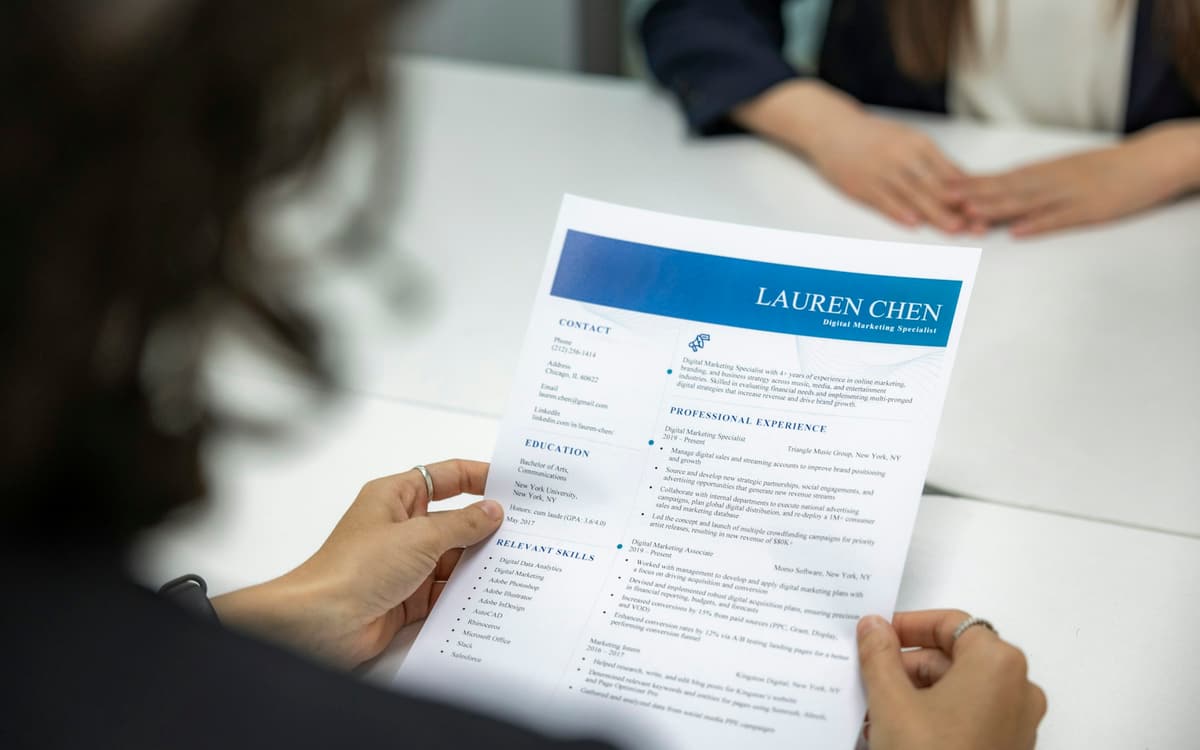
- 6. Team CVs and track record: demonstrate why your team can deliver — polish these using our guides on ATS-ready CVs and professional portfolios.
- 7. Organised administrative appendix: valid IDs, registration certificates, tax ID, business bank details (RIB/IBAN), lease agreement and client letters of intent or purchase orders.
4. Step-by-step roadmap from prospecting to disbursement
Step 1: Shortlist 5 to 8 genuinely matching programmes
Build a simple tracker listing funder name, instrument type (grant, loan, equity), ticket size, eligibility rules and deadline. Read every eligibility clause first: if a call requires two years of audited accounts and you incorporated two months ago, save your energy and target seed programmes instead.
Step 2: Line up your own contribution (skin in the game)
Virtually every lender and grantmaker expects a founder contribution (typically 10% to 25% of total project cost) via cash savings on the company account, paid-for equipment or documented early investments (brand identity, legal setup, initial prototype).
Step 3: Have an advisor stress-test your numbers before filing
Ask an incubator mentor, SME agency advisor, chamber of commerce desk or accountant to challenge your spreadsheets first: external eyes quickly catch forgotten customs duties, shipping, maintenance, taxes or a missing 5–10% contingency buffer.
Step 4: Submit complete files at least 48 hours before the deadline
Online grant portals routinely bog down in the final hour. Upload everything two days early, double-check that every attachment opens cleanly, and archive your submission confirmation receipt.
Step 5: Nail the investment committee or jury Q&A
When shortlisted for an oral hearing:
- Know your three vital numbers cold: unit cost, net margin and monthly debt-service capacity (for loans).
- Address operational risks candidly (supplier lead times, seasonality) alongside your mitigation plan. Our delivery advice in mastering an oral defence applies directly here.
Step 6: Review contract terms carefully and manage tranche disbursements
Before signing, verify the effective interest rate, official arrangement fees, repayment grace period (crucial so new machinery starts generating revenue before the first loan instalment hits), collateral clauses and milestone tranche schedules.
5. Six mistakes that sink applications (plus the #1 scam to avoid)
- Asking for an unsubstantiated round figure (“We need 15 million”) instead of an exact sum backed by supplier pro-forma quotes.
- Hockey-stick revenue fantasies claiming instant market capture without a credible sales budget.
- Ignoring working capital: buying machinery while leaving zero cash for raw materials, power and the first two months of operations stalls businesses on day one.
- Allocating grant budgets primarily to founder salaries rather than productive assets and customer acquisition.
- Submitting generic copy-pasted templates that ignore the funder’s specific budget format.
- Paying fake “processing or release fees” to scammers: the most widespread fraud targeting entrepreneurs on social media and e-mail involves fake “international grant committees” congratulating you on winning 50,000 euros, then asking you to wire 250 euros via mobile money to “unlock transfer insurance”. No legitimate bank, public fund or donor ever asks for upfront mobile-money fees to release a grant — review every safeguard in protecting yourself against data hacking and online fraud.
6. Post-funding discipline: how a small first ticket unlocks five times more
Treat disbursement as day one of your next round. Keep a dedicated audit folder pairing every funded expense with its paid invoice, delivery slip and bank transfer proof, and send progress reports on time without waiting to be chased. Businesses that manage a modest first loan or grant impeccably earn long-term institutional trust for tickets five to ten times larger.
Complete pre-submission funding checklist
When pitching a bank, grant committee or investor, the clarity of your pitch deck, brand identity and digital presence shapes credibility from minute one: talk to our team.